How Long Does It Take To Get A Cfp Certification
How Long Does It Take To Get A CFP® Certification? Let’s Break It Down.
So, you’re thinking about becoming a Certified Financial Planner™. Smart move. It’s a solid career path. But before you dive headfirst, you’re probably wondering, “Just how long is this whole process going to take?” It’s not a simple yes or no answer, folks. Like most things worth doing, it involves a few hoops to jump through, and each one adds a little time to your journey. Let’s get real about the timeline for CFP® certification.
Heads up: This isn’t some quick weekend course. We’re talking about a significant investment of your time and effort. But the payoff? Totally worth it.
The Education Hurdle: Getting Your Learning On
Source : 300hours.com
First things first, you gotta get educated. Think of this as the foundation of your CFP® journey. You can’t skip this part, no matter how much experience you’ve already got rattling around in your brain.
Approved Education Programs
You need to complete a curriculum that’s been blessed by the CFP Board. These aren’t just any finance courses; they’re specifically designed to cover everything a top-tier financial planner needs to know. You can often find these programs at universities or through specialized providers.
Program Formats and Timeframes
The time to complete education really varies. Some folks knock it out in a few intensive months. Others prefer to spread it over a year or two, maybe doing it part-time while they’re already working. It really depends on your life and how much brainpower you can dedicate.
Source : kitces.com
The Capstone Requirement
Most programs wrap up with a capstone course. This is where you’re supposed to pull all that knowledge together and apply it. It’s your final academic boss battle before moving on to the real deal. Expect this to take a few solid weeks of dedicated work.
The Experience Factor: Putting Theory into Practice
Education is one thing, but actually doing the job is another. The CFP Board wants to see that you’ve got real-world financial planning experience. This isn’t just about clocking hours; it’s about the quality of the work you’ve done.
Understanding the Experience Requirements
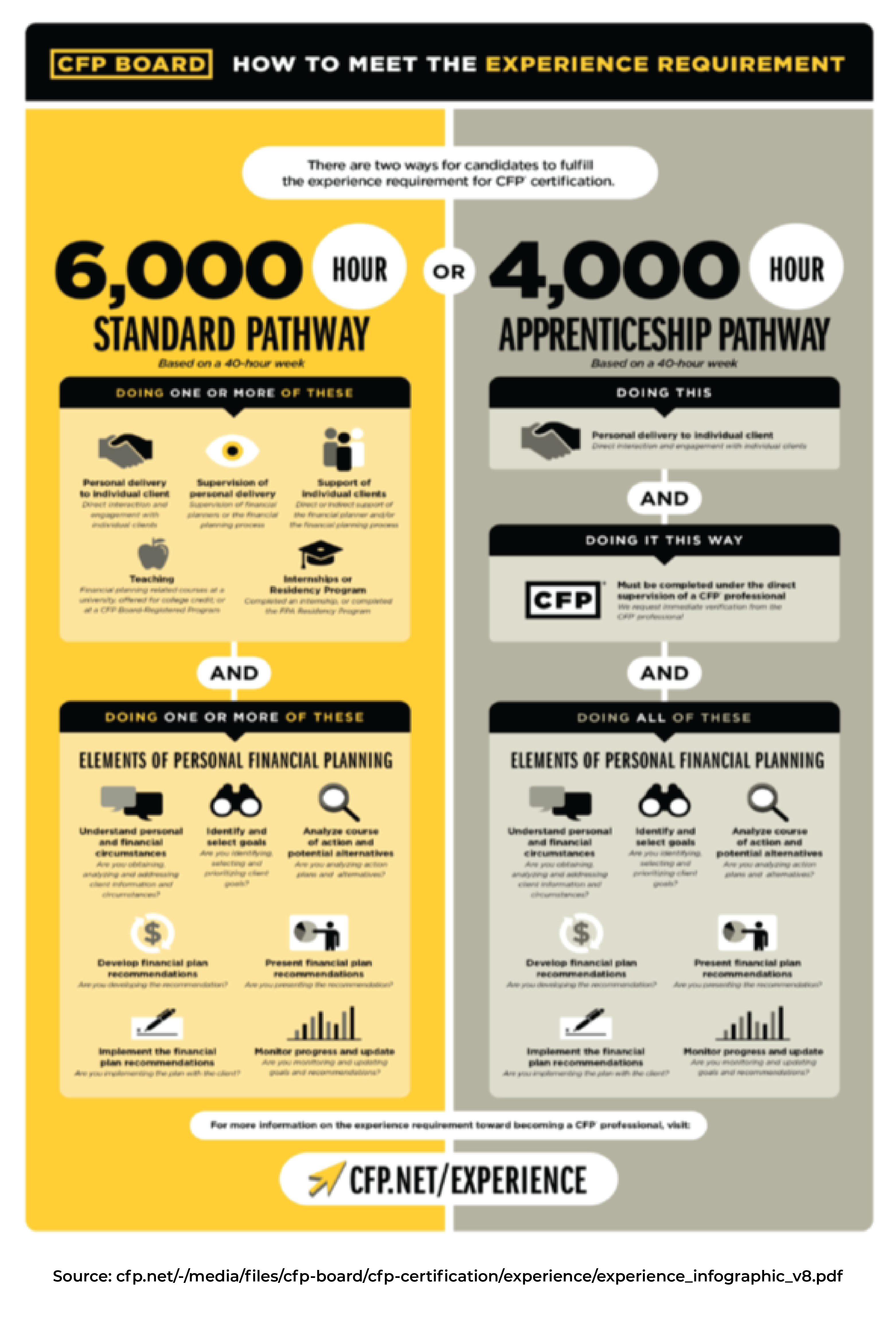
There are specific criteria for what counts. You generally need a certain amount of experience in financial planning, which includes things like client interaction, developing financial plans, and advising on investments, insurance, and retirement. It’s more than just selling products; it’s about Full planning.
The Three-Year Standard vs. the Two-Year Accelerated Path
Most candidates need three years of relevant work experience. However, if you’ve been in a high-level financial planning role for at least two years and meet other criteria, you might qualify for an accelerated path. Check the official guidelines to see where you fit. The CFP® experience requirement is detailed.
Tracking Your Experience
Don’t just assume your work counts. You’ll need to document it meticulously. This usually involves detailed descriptions of your responsibilities and getting sign-off from supervisors. The CFP Board has a process for this on their official site, so you’ll want to review the certification process details carefully.
The Exam Gauntlet: Proving Your Worth
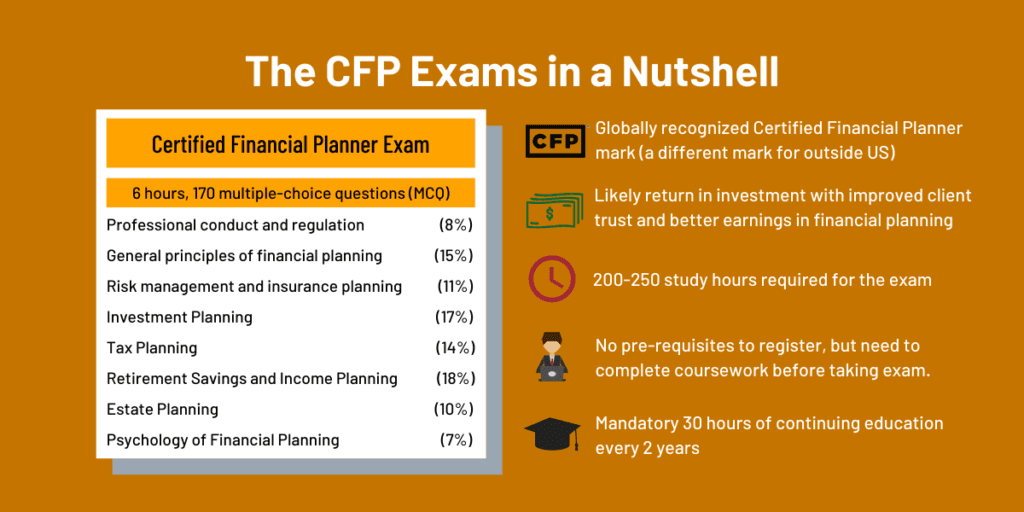
Ah, the exam. This is the big one. The CFP® exam is notoriously tough. It’s designed to test your ability to apply complex financial planning knowledge in real-life scenarios. Think case studies, ethical dilemmas, and a whole lot of pressure.
Exam Structure and Content
The exam is a Full test covering everything from client-interaction and financial plan development to specific areas like retirement planning, insurance, and estate planning. It’s usually broken into multiple sessions, often spread over a few days. It’s a marathon, not a sprint.
Source : accounting.uworld.com
Preparation Time is Key
Most people spend months preparing for the exam. We’re talking 300-400 hours of dedicated study time, or even more! Trying to cram for this? Good luck. You need to really digest the material. Many candidates enroll in specific CFP® exam prep courses, which add to the overall timeline.
Passing Rates and Retakes
Let’s be blunt: the pass rates aren’t exactly sky-high. If you don’t pass on your first try (and many don’t), you’ll have to wait until the next exam window to retake it, and of course, study all over again. This can easily add another 3-6 months (or more) to your total time.
The Application and Review Process
Once you’ve conquered education, experience, and the beast of an exam, you’re not quite done. There’s still a bit of administrative work to do. It’s the final paperwork push.
Submitting Your Application
You’ll need to formally apply for certification. This involves submitting all your documentation – education verification, experience logs, exam results – and paying the application fee. It sounds simple, but gathering everything can take time.
CFP Board Review
The CFP Board then reviews your application. They’re checking to make sure you’ve met all the requirements. This review process can take several weeks, sometimes even a couple of months, depending on their caseload. It’s their due diligence.
Background Checks
As part of the review, they’ll also conduct background checks, looking into your financial history and any potential disciplinary actions. This ensures the integrity of the CFP® designation.
Total Estimated Timeline: Putting It All Together
So, let’s try and put some numbers on this. It’s a rough estimate, mind you, because everyone’s path is different. But it gives you a ballpark.
The Standard Path Estimate
If you do everything sequentially and take a typical amount of time for each step: education (1-2 years), exam prep and sitting (6 months – 1 year including waiting for results), and then the application (1-2 months), you’re looking at a total CFP® timeline of roughly 2.5 to 4 years. Maybe even a bit longer if you have to retake the exam.
Source : 300hours.com
The Accelerated Path Possibilities
Could you do it faster? Potentially. If you’re already working in a role that meets the experience requirements and you can power through the education quickly (say, a 6-month executive program), and nail the exam first try, you might shave off some time. But even then, squeezing it into less than 1.5 to 2 years would be incredibly challenging.
What Slows People Down?
Life happens. People change careers, take breaks, or simply underestimate the study time needed for the exam. Many candidates also choose to gain experience before starting the formal education, which can change the order but not necessarily the total time.
Key Takeaways for Your Timeline
When it comes down to it, getting CFP® certified is a marathon. Don’t expect to rush it. The time commitment is Large, but it’s designed to Make sure you’re truly prepared.
Education Duration
Factor in at least 6-12 months for a part-time program, or a more intensive 3-6 months if you can dedicate full-time effort. This is just the coursework itself.
Experience Accumulation
This is often the longest piece. Three years is the standard. If you’re just starting out, this is your biggest time block. You need to accrue this valuable financial planning experience.
Exam Preparation Phase
Give yourself a solid 4-6 months minimum for serious, focused study. Don’t skimp here; it’s critical.
The Final Steps
Factor in another 1-3 months for application submission and the CFP Board’s review process. It’s the home stretch.
A Sample Timeline Breakdown (Illustrative)
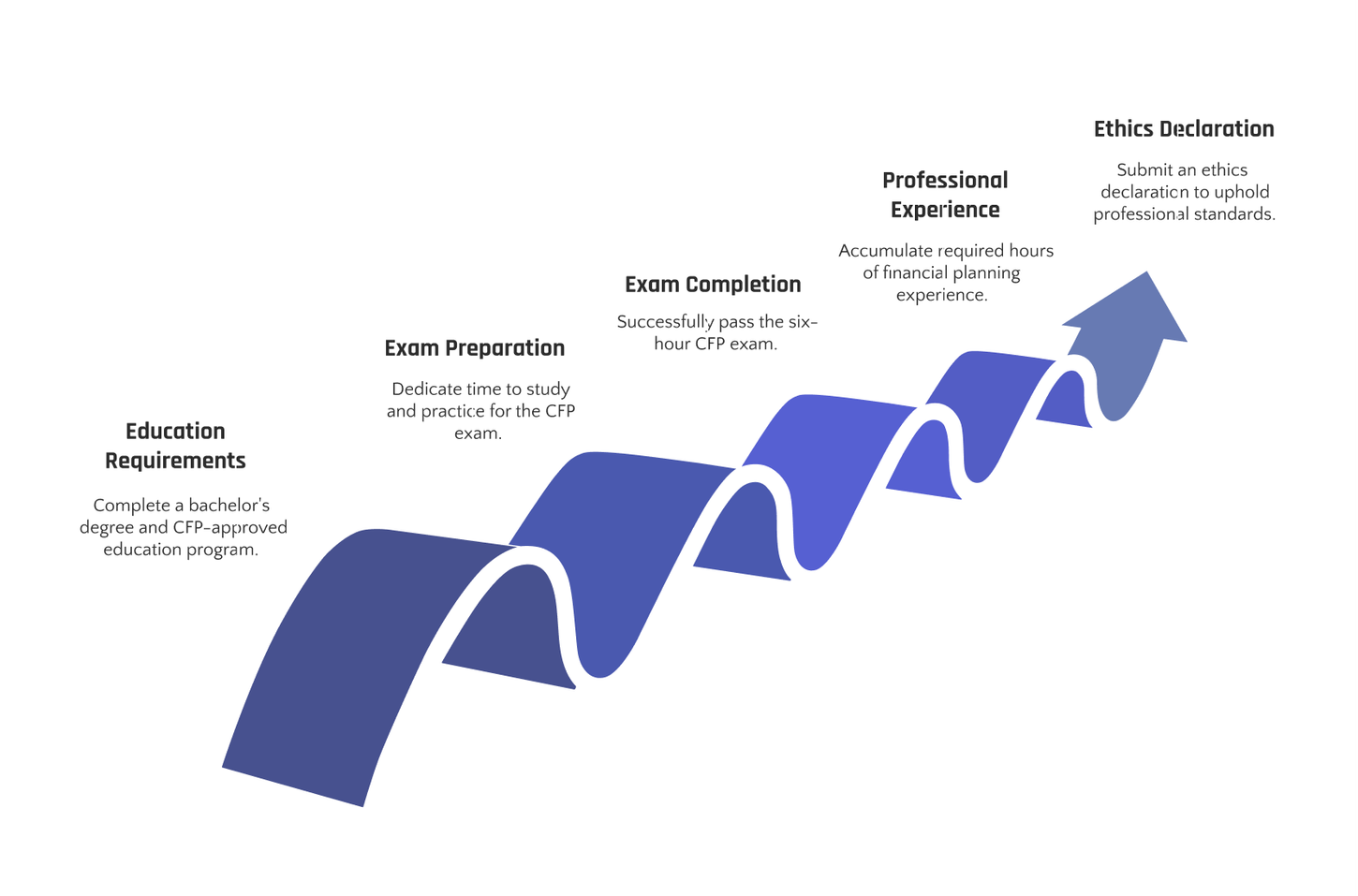
Source : useposeidon.com
Let’s visualize this. This is just one scenario, okay? Your mileage may vary wildly.
| Stage | Estimated Time | Notes |
|---|---|---|
| CFP Board Registered Education | 9 months (part-time) | Completed while working. |
| Relevant Work Experience | 36 months (3 years) | Can overlap with education, but must be completed before application. |
| Exam Preparation & Sitting | 6 months (including study time and waiting for next exam window) | Intensive study required. |
| Application Submission & Review | 2 months | Post-exam, after meeting all requirements. |
| Total Estimated Time | Approx. 3.5 – 4 Years | This is a common, realistic timeframe. |
Don’t Forget Ongoing Requirements
Getting the certification is huge, but it’s not a one-and-done deal. To keep that shiny CFP® mark, you need to fulfill ongoing requirements.
Continuing Education
Every two years, you’ll need to complete a certain number of hours of continuing education (CE). This keeps your knowledge fresh and ensures you’re up-to-date on industry changes and regulations.
Ethics Standards
You must always adhere to the CFP Board’s rigorous Code of Ethics and Standards of Conduct. Maintaining ethical behavior is Top to holding the certification.
Renewal Fees
There are also renewal fees you’ll need to pay periodically to maintain your active certification status. It’s a small price to pay for the prestige.
Frequently Asked Questions
How fast can you become a CFP?
Because it really depends on your background, you could potentially get your CFP certification pretty quickly if you already have a relevant degree and experience. But for most folks, it’s a multi-year process involving education, exams, and work experience. We’re talking at least a couple of years, often more.
Which pays more, CFP or CPA?
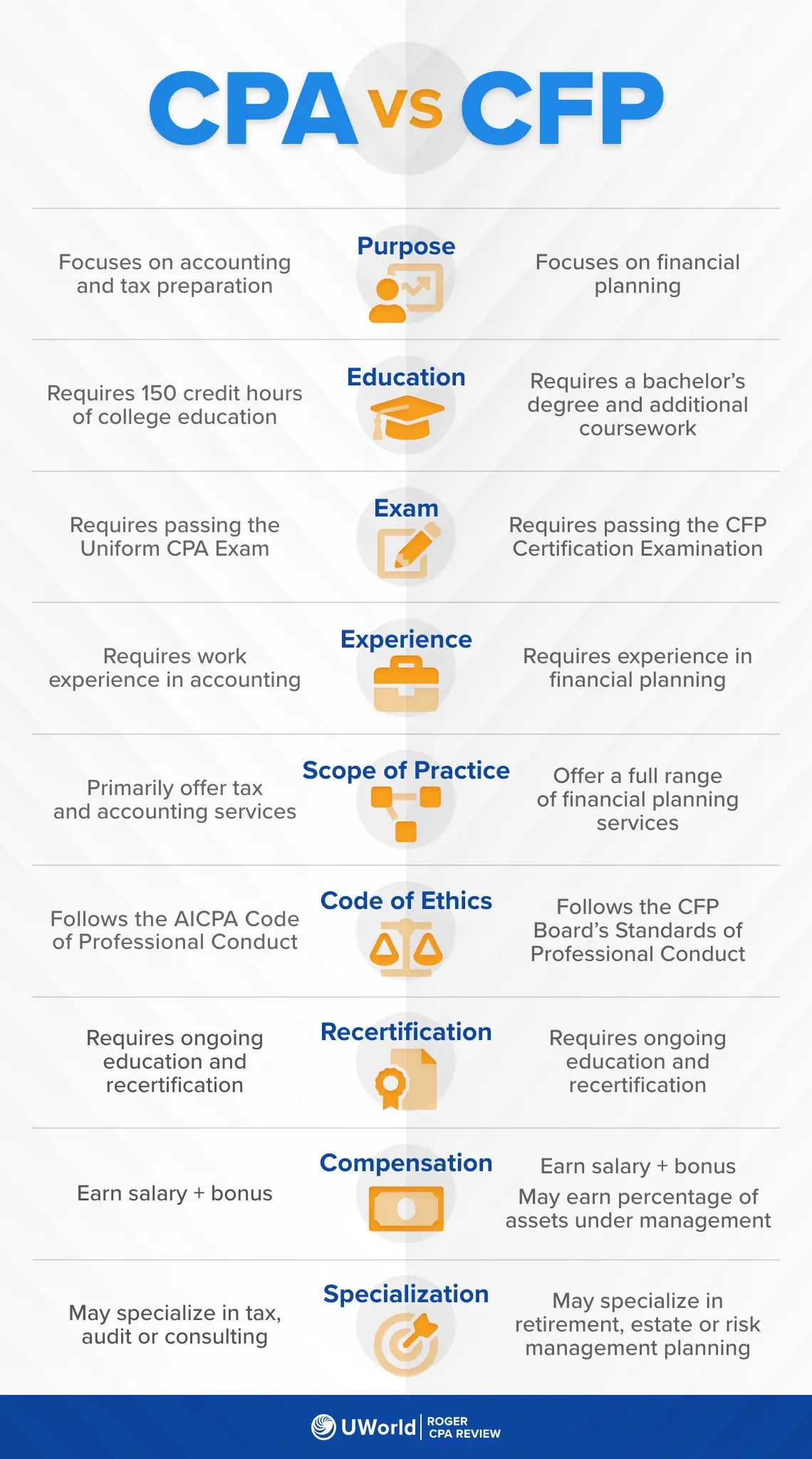
It’s not a simple yes or no. Both the CFP and CPA designations are highly respected and command good salaries. Generally, a CPA might have a slight edge in starting salaries, especially in public accounting, but CFPs often see their earnings grow significantly with experience and client acquisition in financial plaing. It really depends on your niche and career path.
What are the requirements for CFP certification?
To snag that CFP mark, you’ve gotta hit four key areas: education (an approved program), a tough exam, relevant work experience, and ethical standards. It’s not a walk in the park, but totally achievable with dedication. You’ll need to show you’ve got the knowledge and the practical skills.
How much does the CFP exam cost?
The exam itself can be pricey, usually ruing a few hundred bucks. Plus, you’ve got costs for the education courses and maybe some study materials. So, budget accordingly, because it’s an investment to get that coveted CFP designation.
Is the CFP exam hard?
Yeah, the CFP exam is known for being pretty challenging. It covers a wide range of financial plaing topics, and they really test your ability to apply that knowledge in real-world scenarios. Lots of people need to study hard and maybe even retake it, but passing is definitely doable.
0 Response to "How Long Does It Take To Get A Cfp Certification"
Post a Comment