Which Epic Certification Module Is Best For Nurses
Alright, let’s cut to the chase. You’re a nurse, likely swamped, and you’re hearing whispers about these Epic certification modules. Maybe your hospital is pushing it, or you’re just looking for that career boost, that extra credential that screams ‘I know my stuff’. But here’s the real question, the one nobody seems to answer directly: which one is actually worth your precious time and energy?
It’s not just about ticking a box, right? You want to invest in something that makes you Key, something that opens doors, not just another line on your resume that gathers dust. The world of healthcare IT is booming, and an Epic certification can feel like a golden ticket. But picking the wrong module? That’s a one-way street to burnout and buyer’s remorse. We need to figure out which path leads to actual career advancement, not just more stress.
The Real Deal: Why Bother With Epic Certification Anyway?
Beyond the Hype: What’s In It For You?
Look, nobody becomes a nurse to spend their days clicking through software. But the reality of modern healthcare? It’s inextricably linked to the technology running the show. And when it comes to Electronic Health Records (EHRs), Epic Systems is the giant. Getting certified in one of their modules isn’t just a tech skill; it’s about understanding how patient care is delivered in the digital age. It can mean better patient safety, more efficient workflows, and frankly, a more satisfying role for you.
Your Career on Steroids
It. A certified Epic nurse is a valuable asset. Hospitals are constantly upgrading, implementing new modules, or tweaking existing ones. Having that certification means you’re not just a user; you’re a power user, an analyst, maybe even a trainer. This translates directly into higher demand, better job prospects, and yes, a fatter paycheck. We’re talking about a tangible career differentiator here, something that sets you apart in a crowded field.
The Ripple Effect on Patient Care
And let’s not forget the ultimate goal: patient care. When nurses are deeply proficient with the EHR system, things run smoother. Orders get placed faster, documentation is more accurate, and communication between departments improves. A nurse who truly understands their Epic module can identify inefficiencies and contribute to system improvements, directly impacting the quality and safety of care. It’s about being a better nurse, period.

Source : globalitresourcesinc.com
Decoding the Epic Alphabet Soup: Key Modules for Nurses

Source : clindcast.com
The Foundation: Clinical Modules
When most nurses think of Epic, they’re probably picturing the clinical side of things. These are the modules that directly touch patient care workflows. Think about the bedside nurse, the charge nurse, the clinic coordinator. They’re immersed in systems designed to manage patient information, treatments, and progress. These are the core, the bread and butter of nursing informatics.
We’re talking about modules like:
- EpicCare Inpatient: The workhorse for hospital-based nursing.
- EpicCare Ambulatory: Designed for clinics and physician practices.
- Guide Oncology: For specialized cancer care coordination.
- Heartbeat Cardiology: Tailored for cardiac services.
Each of these dives deep into specific patient populations and care settings. Understanding these is fundamental if you want to impact day-to-day clinical operations directly. They’re often the starting point for many nurses looking to transition into more specialized IT roles within healthcare.
The Analytics Angle: Reporting and Data
Beyond the direct patient interface, there’s a massive need for nurses who understand the data. How do we track infection rates? How efficient are our discharge processes? These questions are answered by reports generated from the EHR. Nurses with a knack for data analysis are Crucial. They can translate clinical needs into data requirements and interpret the resulting reports to drive improvements.
Key players here often involve:
- Reporting Workbench: The go-to for quick, ad-hoc reports.
- Crystallize: For more complex, integrated reporting needs.
- Caboodle Data Warehouse: The big data hub for deep analytics.
If you’re the nurse who loves digging into trends, identifying patterns, and making data-driven recommendations, these modules might be your sweet spot. It’s a different kind of problem-solving, but critical nonetheless.
The Operations Hub: Revenue Cycle and Scheduling
Now, this might seem less “nursing” to some, but hear me out. Healthcare facilities are businesses. Efficient scheduling and billing are Key for survival. Nurses often have insights into patient flow, appointment scheduling challenges, and the practicalities of patient registration that administrators might miss. Understanding the modules that handle these operational aspects can make you a bridge between clinical staff and the business side of healthcare.
Consider modules like:
- Prelude Registration: Handles patient demographics and insurance.
- Cadence Scheduling: Manages appointments across departments.
- Resolute Billing: The engine behind claims and payments.
A nurse who understands Resolute Billing can help Improve charge capture or identify documentation gaps that affect reimbursement. It’s a Key, often overlooked, area where nursing expertise is surprisingly valuable.
The “Best” Module: It’s Personal, Folks!

Source : youtube.com
Where Do YOU Shine? Assessing Your Strengths
Okay, so there’s no single “best” module for every nurse. It’s like asking what the best shoe is – depends if you’re running a marathon or just walking to the mailbox. You need to look inward. Are you someone who thrives in the fast-paced, direct patient care environment? Do you love the puzzle of data analysis? Or perhaps you have a knack for organization and optimizing processes?
Current role and what aspects you enjoy most (or least!).
- Do you love direct patient interaction? Focus on EpicCare modules.
- Are you detail-oriented and love finding trends? Look towards reporting/analytics.
- Do you enjoy problem-solving operational bottlenecks? Revenue cycle or scheduling might be your jam.
Your inherent skills and preferences are the biggest indicators of which Epic certification will feel most natural and rewarding. Don’t force it.
Aligning with Your Career Goals
What do you want to be doing in five years? Are you aiming for a management position? Do you want to become a clinical informatics specialist? Or maybe you see yourself as an independent Epic consultant? The certification you choose should be a stepping stone towards that future.
For instance:
- Aspiring Clinical Informatics Nurse: EpicCare (Inpatient/Ambulatory) plus Reporting Workbench certification is a solid combo. This gives you deep clinical workflow knowledge and data interpretation skills.
- Future Epic Analyst/Consultant: Deeper dives into specific modules like Guide Oncology or Cadence Scheduling, often paired with project management skills, could be ideal. Many consultants specialize, so picking a high-demand area is smart.
- Interested in System Optimization: A blend of a core clinical module and a reporting or revenue cycle module can provide a unique, valuable perspective.
Don’t just chase the certification with the highest salary advertised (though that’s a factor!). Chase the one that aligns with the career trajectory you envision. Understanding the different types of Epic modules and their demand is key here.
The Hospital’s Needs: Practical Considerations
Let’s be real: often, the push for certification comes from your employer. They might be implementing a new system, or they might have a critical need for specific skills. While your personal goals are Top, understanding your organization’s current and future needs can be strategically advantageous. Getting certified in a module your hospital heavily relies on (or plans to implement) makes you an immediate internal asset.
This is where talking to your manager or the IT department can be incredibly insightful. Ask them:
- Which Epic modules are most critical to our operations?
- Are there upcoming implementations or upgrades we should prepare for?
- What certifications are you seeing the most demand for internally?
This pragmatic approach can Make sure your certification effort is immediately recognized and utilized. It’s a smart way to Match personal growth with organizational value. Plus, your employer might even foot the bill!
Deep Dive: High-Demand Modules for Nurses
EpicCare Ambulatory: The Clinic Powerhouse
Clinics and physician practices are the front lines of healthcare for many. The EpicCare Ambulatory module is the backbone of these operations. It manages everything from patient scheduling and check-in to clinical documentation, order entry, and results delivery. For nurses working in outpatient settings, mastering this module is non-negotiable.
What makes it so valuable?
Source : virtelligence.com
- Ubiquity: Countless clinics and practices use this module.
- Workflow Integration: It connects front desk staff, nurses, physicians, and ancillary services.
- Efficiency Gains: Streamlines patient flow, reduces administrative burden, and improves communication.
Nurses certified in Ambulatory are highly sought after for roles in practice management, clinical informatics, and as system trainers. It’s a direct pathway to influencing how care is delivered efficiently in community settings.
Reporting Workbench & Caboodle: The Data Whisperers
Remember the analytics angle? This is where it gets serious. Reporting Workbench allows users to create and run reports directly within Epic. But for deeper, more complex analysis, Caboodle comes into play. This is Epic’s data warehouse, consolidating information from various modules into a format suitable for advanced business intelligence and research.
Why nurses with data skills are gold:
- Clinical Context: Nurses understand the data’s meaning and implications in a way IT folks might not.
- Quality Improvement: They can identify trends in patient outcomes, safety events, and operational efficiency.
- Informed Decision-Making: Data-backed insights lead to better strategic choices for the organization.
If you have an analytical mind, a passion for digging into numbers, and want to drive systemic change, these are incredibly powerful modules to pursue. You become the translator between raw data and actionable strategy.
Guide Oncology: Specialization Pays
Cancer care is complex and requires Careful coordination. The Guide Oncology module is designed specifically for this. It manages patient scheduling for treatments, chemotherapy orders, radiation therapy planning, clinical trial management, and patient education. It’s a specialized, high-stakes environment where precision is Top.
The appeal of Guide certification:
- Niche Expertise: Oncology is a critical and growing field, increasing demand for specialists.
- Direct Patient Impact: You’re directly involved in managing complex cancer treatment plans.
- Advanced Workflow Knowledge: Mastering Guide requires understanding intricate clinical pathways and safety protocols.
Nurses who pursue Guide certification often find themselves in specialized roles within cancer centers, working as nurse navigators, chemotherapy coordinators, or informatics specialists focused on oncology. It’s a challenging but incredibly rewarding path.
The Nitty-Gritty: Getting Certified
Formal Training vs. On-the-Job Learning
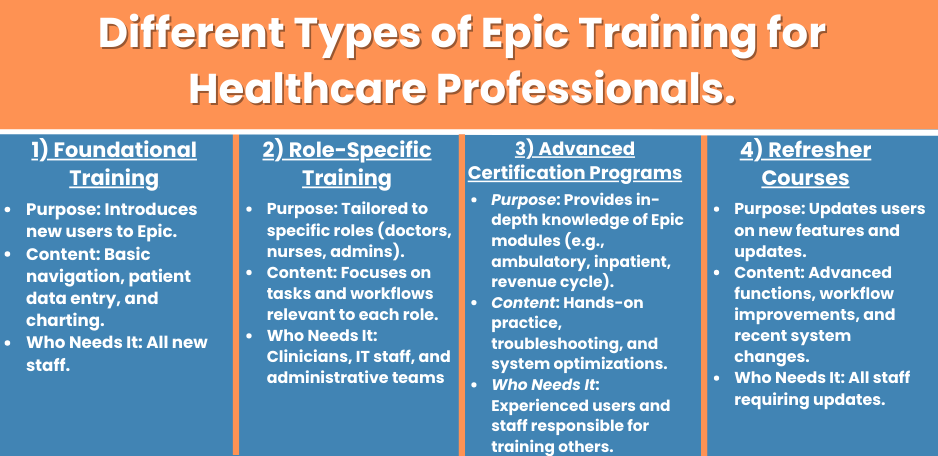
Epic’s official certification process involves rigorous training, typically conducted by Epic or authorized third-party trainers. This often includes classroom instruction, hands-on exercises within a training environment, and a final proficiency exam. It’s structured, Full, and ensures a standardized level of knowledge.
However, many nurses gain Epic proficiency through:
- Employer-Sponsored Training: When a hospital implements or upgrades a module, they often provide internal training and pathways to certification. This is usually the most cost-effective route.
- On-the-Job Experience: Simply using a module daily, asking questions, and seeking out advanced functionality can build significant expertise. While this doesn’t grant formal certification, it builds practical mastery.
Formal certification often carries more weight in the job market, especially for roles outside your current organization. It’s a credential recognized industry-wide. You can find more about training options on the official Epic training portal (though direct access often requires an Epic-affiliated login).
Source : certempire.com
Cost and Time Investment
Let’s talk brass tacks. Formal Epic certification courses can be expensive, often running into thousands of dollars if you’re paying out of pocket. The time commitment is also significant, typically involving weeks of intensive training followed by study and exam preparation. This doesn’t even count the time spent working towards proficiency if you’re learning on the job.
Key considerations:
- Course Fees: Varies widely by module and training provider.
- Time Off Work: You’ll likely need to take time away from your regular duties.
- Exam Retakes: If you don’t pass, there may be fees and further study required.
This is precisely why aligning your certification choice with your career goals and employer needs is Key. You want to Make sure the investment pays off. Many hospitals, particularly those using Epic extensively, will sponsor nurses for certification in critical modules. Always investigate this possibility first!
Maintaining Your Certification
Getting certified isn’t a ‘set it and forget it’ deal. Epic systems evolve constantly. To maintain your certification, you’ll typically need to complete ongoing education modules, attend update training sessions, and sometimes pass recertification exams. This ensures you stay current with the latest features and best practices.
Think of it as continuous professional development:
- Staying Current: EHRs are Active; new versions are released regularly.
- Recertification Requirements: Check the specific requirements for your module.
- Ongoing Learning: Welcome it as a way to deepen your expertise and value.
This commitment to staying updated is what separates a truly valuable Epic-certified professional from someone who just passed a test years ago. It demonstrates a dedication to the field.
The Verdict: Which Epic Module Should YOU Pursue?
Synthesizing Your Options
So, we’ve journeyed through the Field (oops, I mean, the world) of Epic certifications relevant to nurses. We’ve seen that ‘best’ is subjective, tied deeply to your personal strengths, career aspirations, and even your employer’s immediate needs. Whether you’re drawn to the direct patient care workflows of EpicCare Ambulatory, the intricate data analysis enabled by Reporting Workbench and Caboodle, or the specialized demands of Guide Oncology, there’s a path for you.
Don’t underestimate the power of your nursing intuition:
- Reflect: What part of nursing truly energizes you?
- Research: Look into the specific roles and demands for each module.
- Network: Talk to other nurses who are certified.
This isn’t a decision to be made lightly, but with careful consideration, you can choose a module that propels your career forward.
A Sample Career Trajectory Example
Let’s sketch out a possible path. Imagine Sarah, a med-surg nurse feeling a bit stagnant. She enjoys the clinical aspect but wants more influence. She’s good with details and notices recurring issues in documentation that affect charge capture. She decides to pursue certification first in EpicCare Inpatient (her current environment) and then follows up with Resolute Billing training.
Her potential progression:

Source : youtube.com
- Initial Certification: EpicCare Inpatient expertise deepens her clinical understanding and system proficiency.
- Secondary Certification: Resolute Billing knowledge allows her to identify and troubleshoot billing and coding issues related to clinical documentation.
- New Role: She transitions into a Clinical Informatics Nurse role, focusing on improving documentation workflows to enhance both patient care records and revenue cycle accuracy.
This layered approach leverages her existing nursing background and adds a valuable, in-demand skill set. It’s a smart, strategic investment. This Overall view is often missing in basic Epic EHR module guides.
Making the Leap: Your Next Steps
Stop pondering and start acting. If you’re leaning towards a particular module, take the first concrete step. Talk to your HR or education department about training opportunities. If you’re outside an Epic-heavy organization, research third-party training providers or consider contract roles that might offer training. The key is momentum.
Your action plan:
- Identify Top 1-2 Modules: Based on this guide and your self-assessment.
- Investigate Training Options: Check internal resources first, then external.
- Set a Timeline: Give yourself a realistic goal for starting training.
- Talk to Your Manager: Discuss your professional development goals.
Choosing the right Epic certification module is a strategic career move. Make it count.
Module Comparison Data Table
| Module Name | Primary Focus | Typical Nurse Role | Key Skills Gained | Demand Level | Potential Career Path |
|---|---|---|---|---|---|
| EpicCare Inpatient | Hospital-based patient care | Bedside Nurse, Charge Nurse, Floor Specialist | Order entry, documentation, MAR, care plans | Very High | Clinical Informatics, Nurse Educator, Unit Manager |
| EpicCare Ambulatory | Clinic & Physician Practice workflows | Clinic Nurse, MA, LPN, RN in Outpatient | Scheduling, patient intake, e-prescribing, patient portal use | Very High | Practice Manager, Ambulatory Informatics Specialist |
| Reporting Workbench | Data extraction & reporting | Clinical Analyst, Quality Improvement Nurse | Report building, data querying, basic analysis | High | Reporting Analyst, Data Scientist (with further study) |
| Caboodle Data Warehouse | Advanced analytics & BI | Informatics Analyst, Data Analyst | Complex data modeling, SQL, BI tools integration | High | Healthcare Data Architect, BI Developer |
| Guide Oncology | Specialized cancer care coordination | Oncology Nurse Navigator, Chemo Coordinator | Treatment planning, drug protocols, clinical trials management | High | Specialty Clinic Lead, Oncology Informatics Specialist |
| Cadence Scheduling | Appointment & resource management | Scheduling Coordinator, Access Analyst | Optimizing schedules, managing provider templates, improving patient access | Medium-High | Access Management Specialist, Revenue Cycle Analyst |
| Resolute Billing | Claims, payments, and revenue cycle | Billing Specialist, Charge Entry, Financial Counselor | Understanding claims process, payment posting, denial management | Medium-High | Revenue Cycle Manager, HIM Specialist |
The “best” Epic certification for a nurse is the one that aligns with their individual strengths, career ambitions, and the specific needs of their healthcare organization. It’s about making a strategic choice that enhances both your professional value and your ability to contribute effectively to patient care and operational efficiency.
Frequently Asked Questions
Which Epic certification is the easiest?
Honestly, the easiest one really depends on your background, but generally, certifications in modules like MyChart or Reporting are often seen as more accessible for folks new to Epic. They tend to be more focused on user-facing features or data retrieval rather than complex clinical workflows.
Can nurses get Epic certification?
Absolutely! Nurses are prime candidates for Epic certification. In fact, many of the certifications are designed specifically for clinical roles, including nursing. It’s a fantastic way to boost your career and make you more valuable in healthcare settings that use Epic.
Is Epic hard to learn for nurses?
It can have a learning curve, for sure. Because it’s such a Full system, it might seem overwhelming at first. But once you get the hang of the basics and focus on the modules relevant to your role, it becomes much more manageable. Think of it like learning a new charting system – takes a bit of practice, but you’ll get there! Many find their specific nursing modules are intuitive after some training.
Which Epic certification is best for a new grad nurse?
For a new grad nurse, a certification in a core clinical module like EpicCare Inpatient or a related nursing workflow certification would be super beneficial. It shows employers you’re ready to jump into a clinical setting and understand the primary electronic health record system used by many hospitals. It really solidifies your understanding of patient care documentation.
How long does Epic certification take for nurses?
The time commitment can vary a lot, but typically expect anywhere from a few days to a couple of weeks for the actual training and exam. However, that’s usually just for one module. Becoming an expert takes ongoing learning and experience within the system. But getting that initial credential is achievable!
0 Response to "Which Epic Certification Module Is Best For Nurses"
Post a Comment