What Are The Eligibility Requirements For Shrm-Cp Certification
So, you’re thinking about snagging that SHRM-CP certification? Good for you! It’s a badge of honor in the HR world, no doubt. But before you dive headfirst into studying like a madman, let’s get real about what it actually takes to even qualify for the exam. It’s not just about showing up; there are some specific hoops to jump through.
Forget the fluffy stuff. We’re talking about the nitty-gritty requirements.
The Big Picture: Why Bother with SHRM-CP?
Boosting Your HR Credibility
Look, in today’s job market, HR pros need to do more than just process payroll and hire people. You need to be strategic. You need to understand the business.
Getting your SHRM-CP signals that you’ve got that deeper understanding. It tells potential employers you’re not just filling a seat; you’re a valuable asset to the company’s goals.
Demonstrating Competence and Expertise
This certification isn’t handed out like candy. It requires proving you know your stuff across a broad range of HR knowledge and behaviors.
It’s a way to validate your skills, showing you can handle complex HR situations with confidence and professionalism. Think of it as a professional stamp of approval.
Advancing Your Career Trajectory
Let’s be honest, certifications open doors. A SHRM-CP can be the key to unlocking new job opportunities or landing that promotion you’ve been eyeing.
It often translates directly into higher earning potential and more senior-level responsibilities. It’s an investment in your future.
Unpacking the Foundational Requirements
Source : shrm.org

The Education Angle: Degrees Matter (Sometimes)
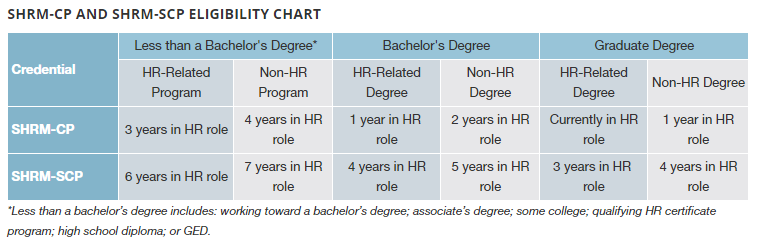
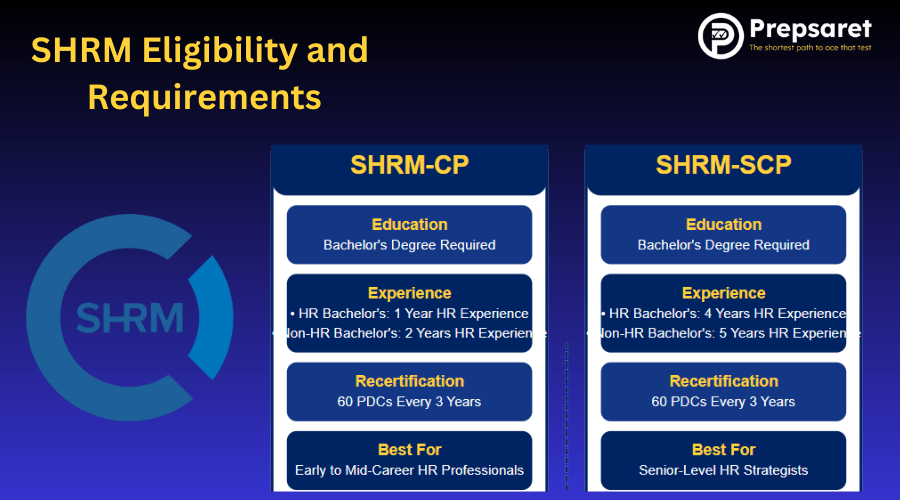
SHRM is pretty clear on this: your educational background plays a role. Most candidates need at least a bachelor’s degree.
Source : jmu.edu
But here’s the kicker: if you don’t have a degree, you can still get in the game, but you’ll need significantly more relevant work experience. We’ll get to that.
Experience is King (Especially Without a Degree)
This is where things get interesting. SHRM requires a certain number of years of HR work experience.
The baseline usually sits around 3 years of professional HR experience if you’ve got a bachelor’s degree. But if your degree is in progress or you don’t have one? Buckle up. You’ll need a good chunk more time in the trenches—think 4 or even 5 years.
Defining “Professional HR Experience”
What counts as ‘professional’? It’s not just answering phones in the HR department.
SHRM looks for experience where you’ve been actively involved in core HR functions. This includes things like employee relations, talent acquisition, compensation, benefits, learning and development, and HR strategy.
Part-time roles might count, but usually only at half the value of a full-time position. So, juggling multiple part-time gigs might not get you there as fast as you’d hope.
Handling the Experience Pathways: Two Distinct Routes
Route 1: The Degree Holder’s Path
If you’ve got a bachelor’s degree under your belt, the path is generally more straightforward.
You need to have completed your degree before you take the exam. It sounds obvious, but double-check you’re not cutting it close.
Then, you need at least 3 years of professional HR experience, where a significant portion of your duties are at the professional level.
Route 2: The Non-Degree Holder’s Path
Don’t have a degree? No sweat, but you’ll need to put in the time.
This route typically requires a minimum of 4 years of progressive HR experience. This means you’ve moved up, taken on more responsibility, and demonstrated growth in the field.
Some sources mention 5 years might be needed depending on the specifics of your experience and how it aligns with SHRM’s definition. It’s Key to check the latest details on the official SHRM website.
The “Progressive” Experience Detail
What does “progressive” really mean? It’s about demonstrating advancement.
SHRM wants to see that you haven’t just been doing the same entry-level tasks for five years. You should have moved into roles with greater scope, strategic input, or leadership.
Think moving from an HR Assistant to an HR Generalist, then perhaps an HR Manager. That’s progression. Just being an HR Coordinator for a decade might not cut it for this path.
Understanding the Behavioral Competencies
The SHRM Body of Knowledge (BoK)
This certification isn’t just about rote memorization. It’s built around the SHRM Body of Knowledge.
This BoK covers a vast array of HR topics, from employee engagement and talent management to compensation, legal compliance, and business acumen. You need to demonstrate proficiency across these areas.
Linking Knowledge to Behavior
The exam tests not just what you know, but how you apply that knowledge. It’s about the behaviors of an effective HR professional.

Source : go.workology.com
These behaviors include things like leadership, communication, critical evaluation, business acumen, and ethical practice. You’ve got to show you can think and act like a strategic HR leader.
Situational Judgment Questions
A big part of the exam involves situational judgment questions. These are scenarios where you have to decide the best course of action.
They are designed to assess your ability to apply HR principles and competencies in real-world workplace situations. Can you solve problems ethically and effectively?
When Experience Counts Differently
Current vs. Past HR Roles
SHRM generally wants to see that your qualifying experience is current.
While older experience can contribute, they often emphasize recent, relevant roles. If you’ve been out of HR for a long time, even with years of past experience, you might need to re-enter the field to meet the recency requirement.
International Experience Considerations
Are you an HR pro working outside the US? Good news: SHRM certifications are globally recognized.
The core requirements around education and experience generally apply universally. However, it’s always wise to check SHRM’s specific guidance for international applicants, as cultural nuances or local labor laws might indirectly influence how experience is evaluated.
What Doesn’t Typically Count
Be careful here. Some roles that touch on HR might not qualify.
Think heavily administrative roles without direct HR decision-making, pure payroll processing without broader HR functions, or highly specialized recruiting roles that don’t encompass other HR competencies.
It’s about the breadth and depth of your HR responsibilities.
The Application Process: More Than Just Checking Boxes
Submitting Your Application
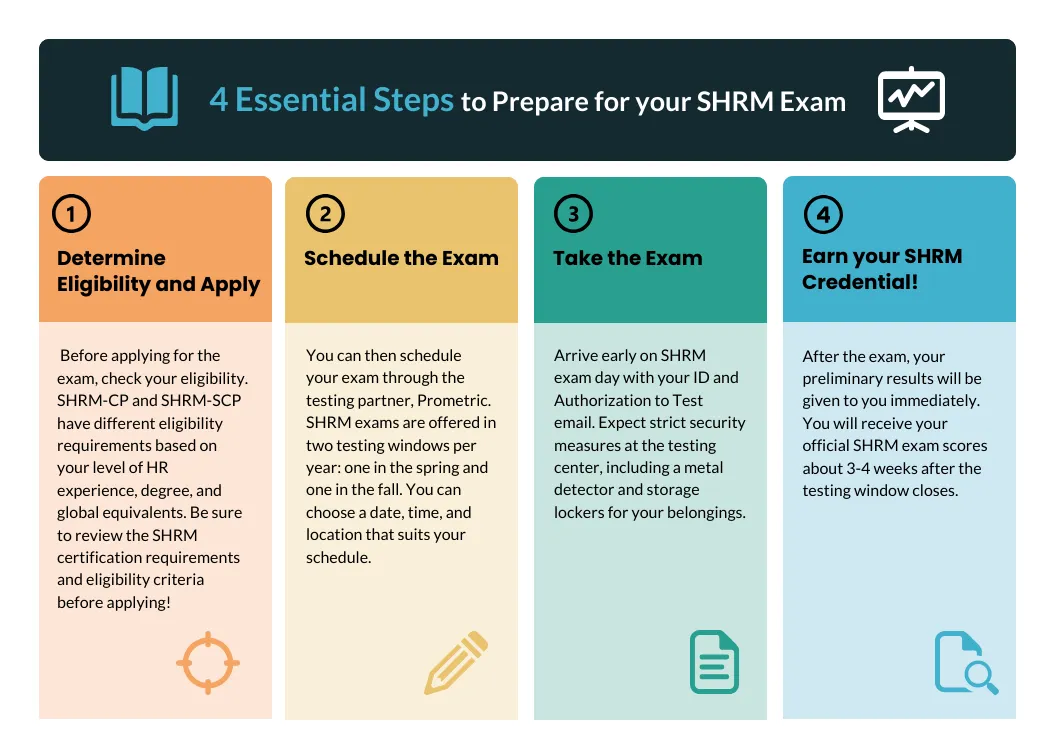
You can’t just show up on exam day. You have to formally apply through SHRM’s portal.
Detailing your education, work history, and confirming you meet the experience criteria. Be honest and thorough.
Verification and Scrutiny
SHRM doesn’t take your word for it blindly. They reserve the right to verify your experience.
They might contact your previous employers. So, make sure the information you provide is accurate and that your supervisors can vouch for your experience.
The Cost and Timing
There’s an application fee, and it’s not trivial. You’ll also need to factor in the exam fee itself.
Pay attention to application deadlines. Missing them means a longer wait until the next testing window. This whole process requires careful planning.
Pre-Approved HR Academic Programs
Source : examedge.com
Leveraging Your Degree Program
Did you get your degree from a program that SHRM has pre-approved? This can sometimes streamline the process.
SHRM evaluates certain academic programs to Make sure they cover the necessary HR knowledge. If your alma mater’s program is on their list, it can simplify the education verification part.
Finding the List of Approved Programs
Where do you find this magical list? It’s usually available on the SHRM certification section of their website.
Check it out if you’re wondering whether your degree might give you a slight edge or simplify a part of the application.
Does it Waive Experience? Nope.
Important clarification: even if your degree comes from a SHRM-approved program, it generally doesn’t waive the professional HR work experience requirement.
It primarily confirms the educational component meets their standards. You still need that practical, on-the-job experience.
The SHRM-CP vs. SHRM-SCP Distinction
Two Paths, Different Levels
It’s Key to understand that SHRM-CP and SHRM-SCP are distinct. The requirements differ significantly.
The SHRM-CP is generally geared towards early- to mid-career HR professionals. It focuses more on the tactical and operational aspects of HR.
Experience is the Key Differentiator
The main difference often boils down to experience level and the nature of that experience.
For SHRM-SCP, you’re looking at a higher threshold of experience, typically 5+ years, and the experience needs to be more strategic and focused on organizational goals.
Choosing the Right Certification for You
Don’t just apply for the first one you see. Honestly assess your career stage and the type of work you do.
Are you implementing HR policies, or are you helping to shape them? That’s a good starting point for deciding between SHRM-CP and SHRM-SCP.
Putting it All Together: A Sample Scenario
Meet Sarah: The Aspiring HR Generalist
Sarah has a Bachelor’s degree in Psychology. She’s been working as an HR Coordinator for 2 years, handling onboarding, benefits administration, and some basic employee relations.
She recently transitioned to an HR Generalist role at a larger company, where she’s now involved in talent acquisition strategy and performance management. She’s been in this Generalist role for 1 year.
Does Sarah Qualify for SHRM-CP?
Let’s break it down. Sarah has her Bachelor’s degree. Check. She has a total of 3 years of HR experience (2 years Coordinator + 1 year Generalist).
Crucially, her recent year as a Generalist involves more strategic and operational HR functions, likely meeting the ‘professional’ experience bar. So, yes, Sarah appears to meet the eligibility requirements for SHRM-CP.
Meet David: The Experienced HR Manager
David has worked in HR for 6 years. He has an Associate’s degree. For the first 3 years, he was an HR Assistant.
Source : prepsaret.com
For the past 3 years, he’s been an HR Manager, overseeing a small team, developing HR policies, and working closely with senior leadership on strategic workforce planning.
Does David Qualify? (Likely SHRM-SCP)
David has his 6 years of HR experience. Check. He has progressive experience, moving from Assistant to Manager.
His recent management role, focusing on policy development and strategic planning, strongly suggests he meets the criteria for the SHRM-SCP, not just the SHRM-CP.
Key Takeaways and Final Thoughts
Honesty and Accuracy are Top
When you fill out your application, be truthful. Don’t exaggerate your experience or educational claims.
SHRM has systems in place, and getting caught in a lie can have serious consequences, including being banned from future certifications. Stick to the facts.
Consult the Official Source
Requirements can change. What’s true today might be slightly different next year.
Always, always refer back to the most current information directly from SHRM. Their official eligibility page is your bible for this.
Is It Worth the Effort?
Absolutely. Handling these requirements is just the first step. The real work is in the preparation and the exam itself.
But passing and earning that SHRM-CP credential? It’s a significant career milestone that pays dividends down the road. Go for it!
Frequently Asked Questions
Who is eligible to take the SHRM CP exam?
Because you’re looking to get your SHRM-CP, you’ll need either a bachelor’s degree and one year of professional HR experience, or if you don’t have a degree, you’ll need three years of professional HR experience. This applies if you’re working in an operational role. If you’re working in a strategic role, the requirements are a bit different, needing a bachelor’s degree and three years of experience, or no degree and five years of experience.
Is SHRM cp hard to get?
It’s definitely a challenge, but totally doable! Think of it as a Full test of your HR knowledge and your ability to apply it. Lots of people find success by using study materials and dedicating consistent time to learning. So, not impossible, just requires some focused effort on SHRM-CP prep.
How much does SHRM cp cost?
The cost can vary a bit depending on whether you’re a member of SHRM or not, and when you decide to take the exam. Generally, you’re looking at somewhere in the range of $300 to $475 for the exam itself. Plus, you might want to factor in costs for study materials, which can add a bit more.
What is the hardest HR certification to get?
That’s a subjective question, really. Some people find the SHRM-SCP to be more challenging because it focuses on the strategic side of HR, which can be more complex. Others might find the SHRM-CP tough depending on their background and experience level. It really comes down to what areas of HR you’re strongest and weakest in.
How long should I study for the SHRM CP exam?
Most folks recommend dedicating at least 80-100 hours of study time to prepare for the SHRM-CP exam. But honestly, it really depends on your prior experience and how quickly you absorb information. Some might need a bit more, others a bit less. Consistency is key, so breaking it down over a few months is often a good strategy.
0 Response to "What Are The Eligibility Requirements For Shrm-Cp Certification"
Post a Comment